News on CABIN CHARTER in Italy
Charter services for multiple clients – news on CABIN CHARTER
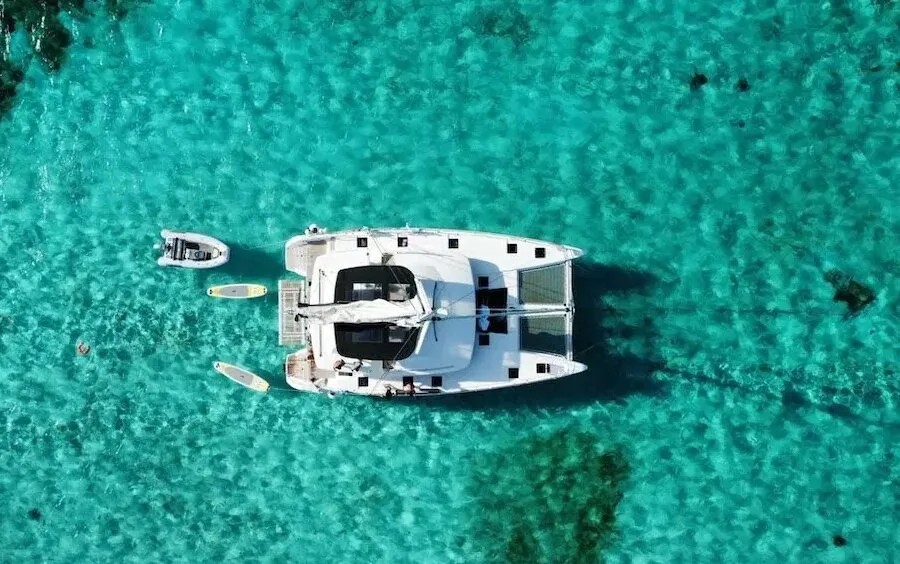
Unlike traditional charter, where a single client takes the entire vessel, the so-called “cabin charter” is a model allows multiple guests to share the same vessel.
Each guest purchases (by signing an individual contract) the use of a portion of the vessel — generally a cabin — or, more simply, a seat/place on board.
The Italian regulations governing cabin charter fall within the scope of the Nautical Code which defines the charter as the provision of a vessel, or part thereof, for recreational purposes.[1]
The real turning point on cabin charter model came with the recent ministerial clarifications regarding the charter of vessels to multiple users/charterers. The Italian Ministry of Infrastructure and Transport (MIT) has recently confirmed that the regulations governing “cabin charter” fall within the scope of the Italian Nautical Code and are therefore fully operational and applicable to charter contracts as well; consequently, multiple contracts may be entered into for as many charterers as there are, regardless of whether the vessel is fitted with cabins or not.
Of particular interest is the clarification contained in the MIT’s note, which reiterates that the cabin charter contract is not comparable to the passenger transport model, which expressly requires the provision of a service connecting two or more predefined locations, thereby indirectly confirming that the so-called ‘transport contract’ promoted in France does not comply with Italian legislation.
The Ministry has also clarified that the ‘cabin charter’ arrangement is possible regardless of whether the vessel has cabins in the technical sense; rather, the term refers to the fact that the vessel is chartered to several parties at the same time. The ‘cabin’, therefore, is no longer necessarily a closed physical space, but can represent any part of the vessel; in practical terms, this means that even vessels without cabins can operate under this arrangement. This clarification opens the way to a new business model alongside traditional yacht charter, making charter services more accessible and attractive to a broader range of clients.
The cabin charter contract must clearly state that a) it is NOT a transport of passenger, b) the client is NOT purchasing a “ticket”, c) the client is a “charterer” and d) the subject matter of the contract is i) a cabin, ii) a berth, iii) a share/space on the vessel, or iv) a functional part of the vessel.
A key element distinguishing charter from hire (bareboat contract) is the presence of a qualified crew on board which is then an essential element of cabin charter becoming not only the guarantor of safety, but also an integral part of the experience offered. Recent reforms in yachting qualifications have also made licenses more accessible, supporting the growth of the Italian charter sector.
However, safety requirements remain unchanged. The charter operator must ensure the vessel is in good working order, that the required safety equipment is present, and that there is adequate insurance cover for passengers.
In Italy, there are already several operators that use, promote, or market cabin charter arrangements, particularly in the sailing, catamaran, and shared cruise sectors. These can essentially be divided into three categories: operators that explicitly sell “cabin charters”, charter brokers that organize shared charters and companies that offer charters with a skipper and crew, compatible with the MIT model.
The cabin charter’s Italian market today still appears to be in a “hybrid” phase since many operators use commercial formulas such as “shared cruise,” “individual boarding,” and “cabin charter” and few only have yet standardized true multi-charterer contracts compliant with the new MIT interpretation.
Cabin charter now represents one of the most significant developments in the yacht charter industry. Thanks to a clearer regulatory framework and a more flexible interpretation, this model is proving to be the ideal solution for combining accessibility, affordability and innovation and it is precisely here that the most interesting opportunities are likely to arise for maritime law firms, management companies, yachting industry associations, charter platforms, booking/multi-contract software and specialized insurance providers.
[1]Article Art. 47, Title III –Chapter II
1. The charter of vessel is a contract whereby the charterer, in return for the agreed charter fee, undertakes to make available to the other party, the charterer or one or more cabin charterers, respectively, the vessel or part thereof for a specified period to be spent for recreational purposes in marine areas or inland waters of their choice, whether at anchor or underway, under the conditions laid down in the contract. The chartered vessel remains at the disposal of the charterer, and the crew also remains under the charterer’s employment.
2. The charter contract may not relate to scheduled ferry services between two or more predefined locations.
3. The charter or sub-charter contract for boats and vessels must be drawn up in writing, failing which it shall be null and void, and the original or a certified copy must be kept on board.
4. In the case of cabin charter, unless the parties agree otherwise, separate charter contracts shall be drawn up for each charterer of a cabin or group of cabins covered by the contracts. ...”
MOORES ROWLAND PARTNERS
Dr Ezio Vannucci
Article Author: Ezio Vannucci MOORES ROWLAND PARTNERS